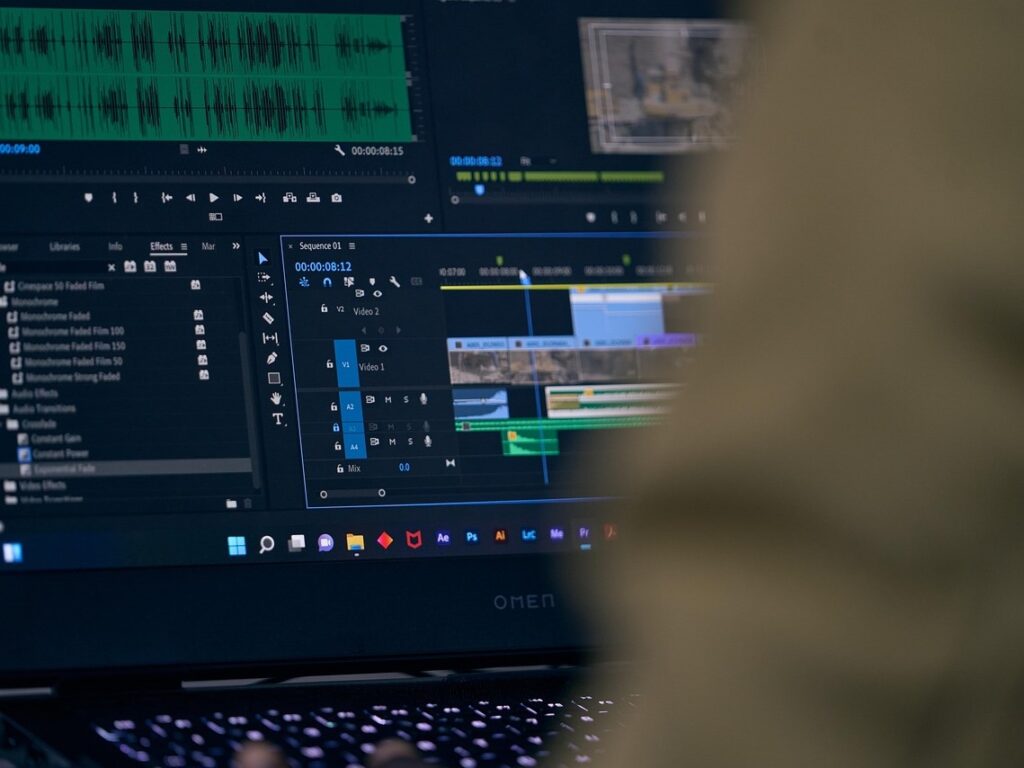
When we think of video production, we usually imagine cameras, lights, and a film crew. The truth is, that’s only the first part of the process. The true “coming to life” of a video happens in post-production – the stage where raw footage is transformed into a professionally finished product.
1. What is post-production?
Post-production includes all activities after filming:
- Editing – selecting and arranging the best shots;
- Color correction – balancing tones, brightness, and contrast;
- Audio processing – removing noise, balancing sound, adding music or effects;
- Visual effects and graphics – titles, animations, logos, special effects;
- Final mastering – preparing the video for distribution across different platforms and formats.
2. Why is post-production so important?
- Professional appearance – even the best-shot video can look amateurish without high-quality editing and processing.
- Focus on the message – unnecessary shots are removed, and the most important moments are highlighted.
- Visual identity – color correction, graphics, and brand elements add recognition and style.
- Emotional impact – music, rhythm, and visual effects enhance the story and leave a lasting impression on the viewer.
3. Practical examples
- Promotional video – without post-production, it will look like raw footage, whereas with editing, music, and graphics it can become a professional advertisement.
- Interview – well-processed audio and proper lighting keep the viewer’s attention.
- Documentary film – it is in post-production that the story gains structure and a compelling rhythm.
4. Post-production as an investment
Clients often view post-production as an extra expense. In reality, it is an investment in the quality, authority, and effectiveness of the video. A well-edited clip can increase campaign ROI and attract a larger audience.
Post-production is the heart of professional video. Without it, there is no completeness, no emotion, no impact. It is what transforms the idea and raw footage into a story that can inspire, persuade, and captivate the viewer.